

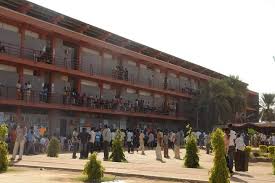
The College of Petroleum and Mining Engineering at Sudan University of Science and Technology is one of the leading academic institutions specializing in supplying the oil and energy industry with distinguished engineering and technological talent. The college’s roots trace back to the university's long-standing history in technical and applied education since 1902. Its initial core was established with the creation of the Department of Petroleum Engineering in 1990—the first of its kind in Sudanese universities. Driven by continuous expansion and the pressing need to cover various sectors of the oil industry, the department was upgraded in 2003 into an independent faculty under the name "College of Petroleum Engineering and Technology." In 2019, its current name was adopted to include the discipline of mining engineering, reflecting a comprehensive vision aimed at serving the nation and industry, fostering human development, and protecting the environment.
The college features an integrated academic structure comprising four main departments: the Department of Petroleum Engineering, the Department of Petroleum Exploration Engineering, the Department of Petroleum Refining and Transportation Engineering, and the Department of Mining Engineering. In addition, it includes a service department for General Sciences and Examinations, as well as a specialized Center for Training, Studies, and Petroleum Consultancies. The college awards B.Sc. (Honors) degrees in Engineering and Technological Engineering through a five-year study program, alongside overseeing technical diploma programs. It also places significant emphasis on scientific research and postgraduate studies, offering Master's and Ph.D. programs in drilling engineering, reservoir engineering, production engineering, and related technological disciplines.
The educational and research processes are supported by a distinguished faculty and visiting experts from prestigious international institutions and corporations, such as Saudi Aramco and Suez University. Furthermore, the college possesses a modern system of advanced laboratories equipped with state-of-the-art testing and measurement instruments, including the Drilling Fluids Laboratory, Geology and Geophysics Laboratories, and the Non-Destructive Testing (NDT) Laboratory, in addition to computer labs and workstations dedicated to reservoir simulation and drilling/production operations design.
Beyond its academic role, the college plays a prominent operational and advisory role in supporting the oil and energy sector through exploration and field development studies, petrophysical evaluation, and advanced professional training programs. The college reinforces its regional and international standing through twinning agreements and scientific and training partnerships with global universities and organizations—such as the China University of Petroleum, the University of Texas, PETRONAS, and the Ministry of Petroleum and Gas—providing its students and graduates with a strong competitive edge in both local and international job markets.