

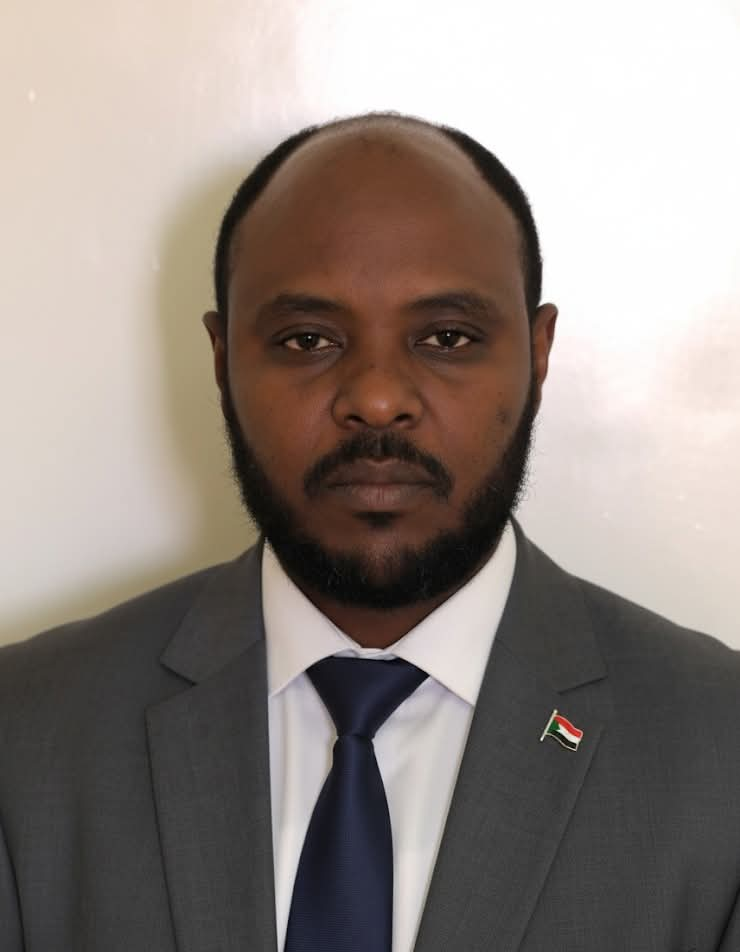
A message from the Director of the Computer Center
Towards a More Resilient Digital University for the Future of Education and Knowledge
Sudan University of Science and Technology is going through a historic phase that requires all of us to look to the future from a different perspective. The war and the damage it has caused have not merely resulted in a temporary interruption to the University's mission; they have compelled us to rethink how we rebuild our educational and scientific institutions in a way that makes them more resilient, adaptable, and better prepared to face future challenges and crises. In this context, the Computer Center has played an essential role in the University's early recovery efforts. Despite the exceptional circumstances imposed by the war, work began to restore and operate the University's core systems and digital services. By the end of 2023, we had succeeded in restoring a number of vital systems and services, including the University's Academic Information System and its student registration and results services, in addition to restoring and operating the University's data center.
The University's Wide Area Network, which connects its various campuses and complexes, represents a strategic asset and the backbone of communications, data exchange, and digital service delivery. The University Data Center is likewise one of the fundamental components upon which the University's digital transformation and the rebuilding of its technology infrastructure can be based. However, our objective today should not be limited to restoring what existed before the war. Our ambition is to digitally rebuild the University according to a modern model that goes beyond what existed before the war, making digital transformation one of the principal drivers of the University's recovery, development, and future growth.
We envision a Digital University that provides smart and accessible services to students, faculty members, and staff; applies digital governance to enhance institutional performance and decision-making; and achieves effective integration of systems and data, enabling reliable, secure, and timely access to information.
Looking ahead, we aim to establish a more resilient and dependable digital infrastructure through the adoption of cloud-based solutions, the modernization and enhancement of the University's Data Center, and the strengthening of business continuity and disaster recovery capabilities. Cybersecurity and data protection will remain among our highest priorities throughout every stage of this transformation.
Artificial Intelligence will also play an increasingly important role in the University's future. Its applications will extend across smart services, data analytics, decision support, teaching and learning, scientific research, and innovation, enabling the University to benefit from emerging technologies in ways that directly support its academic and institutional mission.
We also aspire to build a more open and digitally connected university by expanding collaboration with universities, educational institutions, and research organizations both within Sudan and internationally. Such connectivity will facilitate the exchange of knowledge, expertise, and digital resources while creating broader opportunities for our students and researchers to learn, collaborate, innovate, and contribute to the advancement of knowledge.
The reconstruction of the University is not simply a matter of rebuilding buildings and replacing equipment. It is an opportunity to rebuild the knowledge, technology, and institutional ecosystem on foundations that are more modern, efficient, resilient, and sustainable.
At the Computer Center, we firmly believe that technology is not an end in itself. Rather, it is a powerful means of building a university that is more resilient, more efficient in fulfilling its mission, and more connected to the world.
Our aspiration is for Sudan University of Science and Technology to emerge from recovery and reconstruction as a leading Digital University—one capable of transforming today's challenges into opportunities for tomorrow, rebuilding what was lost in a better way, and laying the foundations for a future that is more advanced, connected, and innovative than what existed before the war.
Altayib Abukassawi Ali Ahmed
Director of the Computer Center
Sudan University of Science and Technology